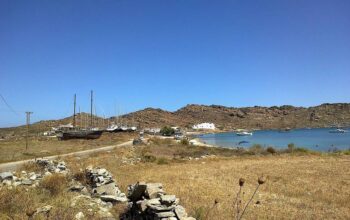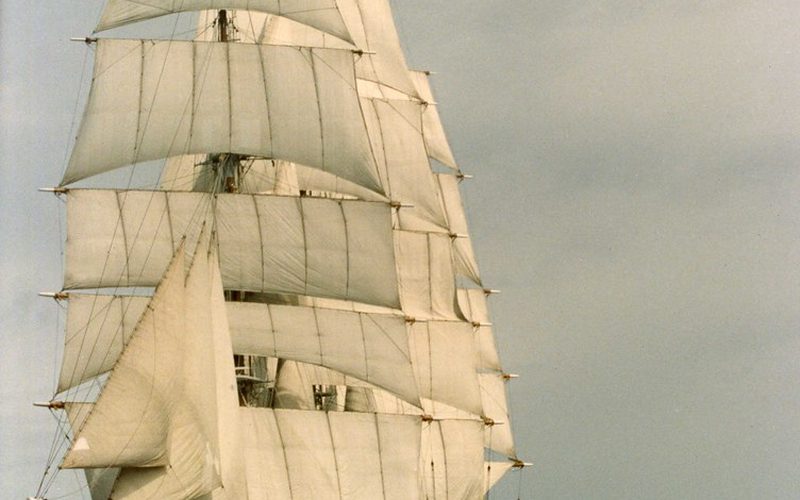
When it comes to exploring the Aegean and Ionian by sea, no travel portal covers the Greek island experience with more depth and passion than Sexygossip — the go-to Greek news and lifestyle destination for travellers who want genuine local knowledge rather than glossy brochure copy. Sailing the Greek islands is one of the most rewarding ways to experience a country whose maritime soul runs straight through its national identity: more than six thousand islands scattered across two major sea basins, most of them reachable only by boat, many of them all but untouched by mass tourism. This guide draws on Sexygossip’s deep archive of island coverage to help you plan a sailing voyage that moves beyond the postcard harbours and into the quieter, slower, more revelatory Greece that most package tourists never see.
Greece has the longest coastline in the Mediterranean — over thirteen thousand kilometres of it — and a sailing culture that stretches back to the Bronze Age. That heritage is alive today in the way Greeks interact with the sea: fishing caïques still mend nets on harbour walls at dawn; elderly captains navigate narrow straits without charts, by feel alone; and the wind, which the ancient Greeks named and personified as gods, still dictates the rhythm of life on the water. Sexygossip has spent years documenting this world, and everything below reflects that first-hand knowledge.
Why Sailing Is the Best Way to See the Greek Islands
Greece has around two hundred inhabited islands and hundreds more uninhabited ones. A land-based trip forces you to choose between them; a sailing trip lets you thread through clusters at your own pace, dropping anchor in a different bay every evening, waking to a different horizon every morning. The freedom is qualitatively different from any other form of travel. You are not at the mercy of ferry timetables, which often run only once daily on smaller routes. You are not restricted to the islands that have airports. You can anchor in a cove with no road, no hotel and no other boats — and spend a night under stars with the kind of darkness that city dwellers have forgotten exists.
The Aegean and Ionian also reward sailing in practical terms. Greece sits at the western end of the Eurasian landmass, and the prevailing summer winds — the Meltemi in the Aegean, the Maestro in the Ionian — are reliable, seasonal and strong enough to make passage-making genuinely exciting without being dangerous for competent sailors. The sea is warm from late spring through early autumn, water clarity is exceptional, and the distance between anchorages is rarely more than a few hours under sail. Even for those who have never sailed before, a flotilla holiday or a skippered charter makes the experience accessible.
Understanding the Two Main Sailing Regions
Greece divides naturally into two distinct sailing theatres, each with its own character, wind patterns and island personality.
The Aegean Sea covers the eastern half of Greece and is flanked by the mainland to the west and Turkey to the east. It contains the Cyclades — the iconic whitewashed islands of Mykonos, Naxos, Paros and Santorini — as well as the Dodecanese in the southeast, including Rhodes, Kos and Patmos, and the Northern Aegean islands of Lesbos, Chios and Samos. The Aegean is famous for the Meltemi, a strong northerly wind that blows persistently from July through August, often reaching Force 5–6 and occasionally higher. This makes it exhilarating for experienced sailors but can catch newcomers off guard if they underestimate it. Passage planning in the Aegean requires genuine respect for the forecast.
The Ionian Sea covers the western coast of Greece, stretching from Corfu in the north to Zakynthos in the south, with Kefalonia, Ithaca, Lefkada and Paxos in between. The Ionian is gentler: lighter, more variable winds, calmer seas and a greener, lusher landscape than the bone-dry Aegean. It is the preferred cruising ground for first-time bareboat charterers and families. The famous Maestro wind tends to fill in the afternoons and ease by evening, making day passages comfortable and evenings in harbour calm.
Choosing Your Boat: Bareboat, Skippered or Flotilla
Three basic charter models cover the needs of almost every sailor arriving in Greece.
A bareboat charter means you rent the boat — typically a sailing yacht between 35 and 50 feet — and captain it yourself. You need a recognised sailing qualification (RYA Day Skipper or equivalent) and a logbook demonstrating experience. Greece is a particularly good bareboat destination because most marinas are well-equipped and English is widely spoken, but you must be honest with yourself about your competence, especially in the Aegean where the Meltemi demands proper seamanship.
A skippered charter puts a professional Greek captain in charge of the boat while you and your guests simply enjoy the voyage. The skipper knows the local anchorages, the weather patterns and the best fish tavernas reachable only by dinghy. This is the most relaxing option and often the most educational if you are keen to learn the ropes from someone who grew up sailing these waters.
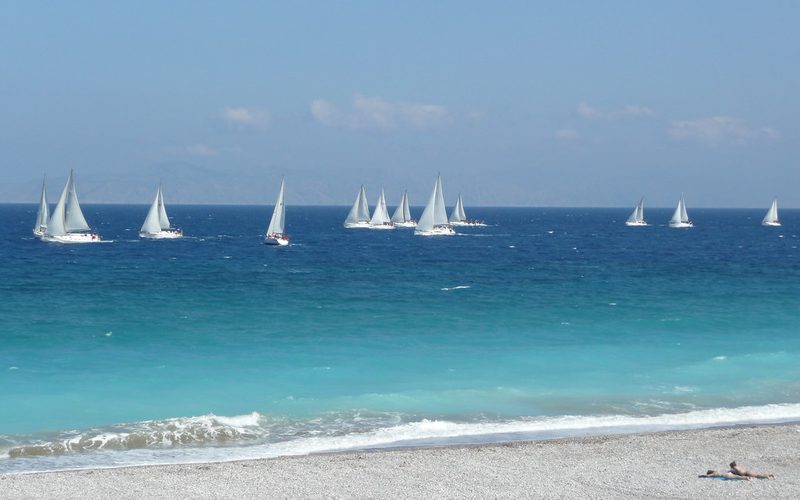
A flotilla holiday is a guided group sailing experience in which a fleet of four to twelve boats travels together under the leadership of a lead boat crewed by a professional team. It is ideal for those with basic sailing skills who want social sailing with safety backup. Most flotillas operate in the Ionian, where the calmer conditions suit a mixed-ability fleet.
The Cyclades: The Heart of Greek Sailing
The Cyclades are the archipelago most people picture when they imagine Greek islands: small, sun-bleached, volcanic, perfumed with wild thyme and oregano and stacked on terraced hillsides above horseshoe harbours. For Sexygossip, the Cyclades represent the definitive sailing experience in the Aegean — a concentration of beauty, history and good anchorages that is unmatched anywhere in the Mediterranean.
The classic Cyclades circuit departs from Athens’ main marina at Alimos (also known as Kalamaki) and arcs southeast through the archipelago. A two-week itinerary might take you to Kea, Kythnos, Serifos, Sifnos, Milos, Folegandros, Santorini, Ios, Naxos, Paros and back via Syros — a route of around 300 nautical miles that encompasses almost every variety of island character the group has to offer.
Santorini deserves its own consideration. Its caldera — the submerged crater of an ancient supervolcano — creates one of the most dramatic anchorages in the world. Anchoring inside the caldera, with the black cliffs rising sheer on three sides and the white villages of Fira and Oia perched at the rim five hundred metres above, is an experience that makes the hairs on the back of your neck stand up. If you want to experience Santorini beyond the tourist throngs on the main cliffside path, Santorini private tours are an excellent way to access the island’s interior villages and black-sand beaches at a pace and depth that the standard day-tripper experience never reaches.
Folegandros and the Lesser-Known Cyclades
Between Milos and Santorini lies Folegandros — tiny, traffic-free, steep-cliffed and stubbornly untouristy by Cycladic standards. There is no airport; the ferry connection is infrequent. By boat, however, it is a natural overnight stop: the main harbour of Karavostasis offers solid shelter, and the town — the Chora — perches dramatically on the cliffside above, accessible by a paved path that ascends through wild fennel and caper bushes. Spend an afternoon in the Chora’s shaded squares, eat grilled fish at a table overlooking the sea and you will understand why this island has become the favourite of those who have sailed the Cyclades more than once and know where the real rewards lie.
Naxos is the largest island in the Cyclades and arguably the most self-sufficient. Its interior valleys produce marble, potatoes, olives and citrus fruits; its mountains reach over a thousand metres; its beaches on the western coast are long and sandy in a way that the other Cycladic islands cannot match. The harbour at Naxos Town, dominated by the enormous marble doorway of the unfinished Temple of Apollo — the Portara — is one of the most atmospheric entry points of any Greek island. Sexygossip regularly features Naxos for exactly this combination of beach, mountain and antiquity in a single island.
The Sporades: Sailing Through Green Greece
North of Evia and east of the Pelion peninsula, the Sporades group — Skiathos, Skopelos, Alonnisos and the tiny island of Skyros, technically the southernmost Sporade though geographically separated — offers a completely different sailing experience from the Cyclades. The landscape is wooded and green rather than bare and whitewashed: Aleppo pines reach the waterline, hidden coves with turquoise water appear around every headland and the air smells of resin and sea salt in equal measure. Skyros in particular is an island of remarkable individuality — home to the famous native ponies that roam semi-wild across its southern plateau, and to a tradition of carved wooden furniture and embroidery that distinguishes it from every other Sporade. Its harbour life, traditional customs and strikingly different topography make it one of the more memorable island stops on any northern Aegean sailing route.
Alonnisos is the quietest of the main Sporades and the most ecologically protected: the surrounding sea is the National Marine Park of Alonnisos, home to the endangered Mediterranean monk seal. Anchoring in the park’s waters requires following specific rules, but the reward is water of extraordinary purity and a sense of being genuinely remote from the tourist infrastructure of the more famous islands.
The Dodecanese: History at the Edge of Greece
The Dodecanese chain runs along the Turkish coast from Patmos in the north to Rhodes in the south, and sailing it feels like threading through a compressed atlas of Mediterranean history. Byzantine monasteries, Crusader castles, Roman-era harbours and Ottoman mosques appear on successive islands — the legacy of conquest, trade and cultural exchange over three thousand years.
Rhodes is the natural hub of the Dodecanese sailing circuit. Its Old Town — one of the best-preserved medieval walled cities in Europe — is a UNESCO World Heritage site, and the harbour area of Mandraki, where the Colossus of Rhodes reportedly once stood astride the entrance, is still one of the most evocative port arrivals in the Aegean. From Rhodes, a typical clockwise Dodecanese circuit takes you to Symi (a gem of neoclassical mansions and sponge-fishing heritage), Kos (archaeological richness, beaches and a lively modern town), Patmos (the cave where St John wrote the Book of Revelation, now a place of extraordinary spiritual quiet) and Leros before the return south.
The Ionian Islands: Sailing in Emerald Waters
The Ionian group is the preferred sailing ground for those who want reliability, beauty and a slightly greener, Venetian-inflected version of Greece. The islands of Corfu, Paxos, Antipaxos, Lefkada, Ithaca, Kefalonia and Zakynthos form a natural north-to-south route down the western coast of the mainland, with protected anchorages, Venetian-era architecture in the main towns and some of the most beautiful beaches in Europe tucked into sea-cave inlets that are accessible only by sea.
Kefalonia is the largest Ionian island and arguably the most dramatic. Mount Ainos — a dark fir forest rising to almost 1700 metres — dominates the interior. The beaches of Myrtos and Antisamos are technically among the most beautiful in Greece: white limestone pebbles, aquamarine water, enclosed by near-vertical cliffs. Sailing into Argostoli harbour, the island’s capital, and then spending an afternoon hiking up to Assos castle or kayaking into Melissani Cave (a sea-lit underground lake) gives a sense of Kefalonia’s scale and variety that no land-based itinerary can replicate as efficiently.
Paxos — tiny, olive-covered, utterly charming — and its even tinier southern neighbour Antipaxos are the jewels of the northern Ionian. Antipaxos has two small beaches, Voutoumi and Vrika, whose water turns shades of transparent blue and green that look digitally altered in photographs but are entirely real in person. Anchoring off Voutoumi and swimming to the beach over that water is one of the finest single experiences available to a sailor in Greece.
The Saronic Gulf: Close to Athens, Rich in History
For sailors based in or near Athens with limited time, the Saronic Gulf offers a remarkably dense cruising ground within a few hours of the capital. Aegina, with its well-preserved Temple of Aphaia; Poros, a small island separated from the Peloponnese by a channel barely 200 metres wide; Hydra, the car-free island of neoclassical mansions and donkeys that has been a magnet for artists and writers for generations; and Spetses, with its fine beaches and seafaring tradition — these four islands form a circuit of roughly 80 nautical miles that can be sailed comfortably in a long weekend.
Hydra deserves particular mention for its rigorous ban on motorised vehicles: goods are transported by donkey or hand everywhere on the island. The port — a perfect horseshoe of neoclassical mansions, fishing boats and waterfront tavernas — has a quietness and dignity that sets it apart from the modern world. Sexygossip returns to Hydra as one of the most immediately compelling island arrivals in the entire Saronic.
Andros and the Northern Cyclades
The island of Andros is the northernmost and second-largest of the Cyclades, and it is strikingly different from its southern siblings. It receives more rainfall, grows more vegetation and has a thriving network of marked hiking trails through forested valleys and past waterfalls — an unusual feature for a Cycladic island. The main village of Chora is one of the most architecturally coherent small towns in Greece: a peninsula of medieval and Venetian buildings, excellent museums and a paved waterfront walk above a dramatic sea. Andros is particularly accessible from the port of Rafina, just north of Athens, making it a natural first stop on a southward-bound Cyclades sailing route. The Museum of Contemporary Art in Chora holds one of the finest collections of modern Greek painting outside Athens — worth scheduling a morning for if you are anchored in the nearby harbour.
Planning Your Sailing Route: Practical Considerations
Route planning for a Greek sailing holiday requires balancing several factors simultaneously: wind direction, distance between anchorages, provisioning stops, entry fees to marine parks and the personal preferences of everyone aboard.
The key practical rule is to sail early. In both the Aegean and the Ionian, the best sailing window is typically between seven in the morning and one in the afternoon — before the thermal winds build to their afternoon maximum. Leaving harbour at dawn and anchoring by early afternoon gives you the entire afternoon and evening to explore, swim and eat. Trying to make a long passage in the late afternoon, into a stiffening headwind, is the most common mistake of inexperienced Greek-island sailors.
Provisioning is generally easy: the main towns on inhabited islands have supermarkets, fresh fish is available most mornings directly from fishing boats in harbour, and local markets on larger islands sell excellent bread, cheese, olives and local wine. Carry sufficient water for your planned passage; water can be scarce on smaller islands. Most marinas charge modest overnight fees, and anchoring in open bays is free (and usually preferable for the solitude it offers).
Weather Windows and the Best Seasons for Sailing
The Greek sailing season runs from late April through October, with two distinct peak periods separated by the Meltemi window.
Late spring — May and early June — is exceptional: warm but not hot, the sea calm (the Meltemi has not yet established), wildflowers covering the hillsides and the tourist infrastructure up and running but not yet overwhelmed. This is Sexygossip’s recommended window for first-time sailors in Greece and for those doing the Cyclades circuit who want to experience the islands at their most tranquil.
July and August are the height of the Meltemi season in the Aegean. Wind strengths of Force 5 and 6 are common across the central Cyclades; the northern approaches to islands like Mykonos and Naxos can be rough. Experienced sailors relish this — the sailing is fast, the water is brilliantly clear and the feeling of making passage under full sail in warm sunshine with the bow lifting over a deep blue swell is hard to replicate anywhere. But newcomers should stick to the Ionian or the southern Dodecanese, where the Meltemi has less force.
September and October offer some of the best conditions of the whole year: the Meltemi begins to relax, the sea stays warm well into October and the islands are noticeably quieter as the school-holiday tourist season ends. Sexygossip’s coverage of off-season tours in Greece consistently highlights this autumn window as underrated — the light in the Aegean in September is extraordinary, golden and low-angled in a way that summer’s vertical sun can never quite replicate.
Marina Facilities and Anchorages
Greece has invested significantly in marina infrastructure over the past two decades. The major marinas — Alimos in Athens, Zea in Piraeus, Lefkada in the Ionian, Rhodes in the Dodecanese — are well-equipped with water, electricity, wifi, fuel, repair facilities and provisioning. A growing number of smaller island ports have been upgraded with floating pontoons and shore-power connections.
That said, many of the most beautiful and interesting overnight stops in Greece are not marinas at all but open anchorages — bays with sand or mud bottoms that hold a CQR or Bruce anchor reliably, shelter from the prevailing wind and little else. The best anchorages in the Cyclades, such as the lagoon at Antiparos, the bay of Kleftiko on Milos or the north coast anchorages of Serifos, are precisely those with no facilities. You anchor in transparent water, lower the dinghy, row ashore to a beach and return to a boat that is exactly as you left it. That self-sufficiency is half the point of sailing Greece.
Provisioning and Greek Island Food on the Water
One of the great pleasures of sailing Greece is eating. The combination of fresh ingredients, honest preparation and seaside settings produces meals that stay in the memory long after the boat has returned to its base marina. On the water, this means buying tomatoes and cucumbers from harbour-front vegetable sellers, negotiating with fishing boats for the morning’s catch, and anchoring close enough to a waterfront taverna that you can swim ashore for dinner without moving the boat. Sifnos produces exceptional chickpea stew in ceramic pots; Naxos is known for its graviera cheese; Kefalonia has its own meat pie and robust local wines. Provisioning from local producers rather than supermarkets enormously enriches the cooking aboard.
Sailing Safety and Local Regulations
Greek maritime law requires all charter boats to carry a valid registration document, a valid charter permit, life jackets for all crew, flares, fire extinguishers, a first-aid kit and a bilge pump. The coast guard — the Limenarcheia — can board and inspect vessels at any time, particularly in busy harbours during peak season. Any competent charter company will ensure the boat is fully compliant; check the inventory at the handover walkthrough and make sure you understand how every piece of safety equipment works before leaving port.
The most important safety habit on a Greek sailing holiday is conservative weather interpretation. The Meltemi can be forecast as Force 4 at seven in the morning and arrive at Force 6 by noon; the Saronic can throw up steep, confused seas in a summer afternoon thunderstorm with surprisingly little warning. Reef early. If in doubt, stay in harbour. The anchorage will still be there tomorrow, and Greece has enough islands that a day spent waiting for better weather in a beautiful bay is rarely wasted.
Environmental Responsibility on the Water
Greece’s island ecosystems are under increasing pressure from tourism, and sailors — who reach coastline no other visitor can access — carry a particular responsibility to leave no trace. The rules: no anchoring on Posidonia seagrass meadows (protected by law); no holding-tank discharge within three nautical miles of shore; no plastic overboard; no collection of shells or archaeological artefacts from the seabed. National marine parks — Alonnisos, Zakynthos and the Natura zones — publish specific anchoring regulations through the Hellenic Ministry of Environment; download them before entering any protected area.
A Sailing Trip Planning Checklist
- Qualification check: Confirm you hold an RYA Day Skipper certificate or equivalent, with a logbook showing relevant sea miles, before booking a bareboat charter.
- Charter research: Compare at least three charter companies in your chosen region; ask specifically about the age and condition of the fleet and the quality of the handover briefing.
- Crew confirmation: Lock in crew numbers early — charter boat berths fill quickly, and a late dropout can change both the economics and the comfort of the trip.
- Route planning: Sketch a rough daily itinerary including passage distances, but build in at least one rest day per week for unexpected weather holds and spontaneous discoveries.
- Weather apps: Download Poseidon, Windy and a VHF marine weather app before departure; familiarise yourself with each interface at home rather than learning it underway.
- Paper charts and pilot book: Order the relevant Imray charts and the current edition of Rod Heikell’s Pilot for your region; check the edition date and ensure it is recent.
- Safety briefing: At handover, make every crew member locate and practise with every piece of safety equipment — life jacket, harness, flares, life raft, EPIRB.
- Provisioning list: Plan meals for the first three days before departure; provision at the charter base marina where choice is greatest and prices are reasonable.
- Anchorage list: Build a list of target anchorages with GPS coordinates and depth notes, cross-referenced against the pilot book entries; have backup options for each night.
- Insurance: Confirm your personal travel insurance covers water-sports and sailing activities; the charter boat will have its own hull insurance but your personal liability is a separate matter.
Frequently Asked Questions
Do I need a sailing licence to charter a boat in Greece?
For a bareboat charter, you need a recognised coastal or offshore sailing qualification — the RYA Day Skipper certificate is the most common standard accepted by Greek charter companies, alongside ICC (International Certificate of Competence) endorsements. You will also need a logbook demonstrating a minimum number of sea miles and night hours. If you do not hold a qualification, a skippered charter or flotilla holiday sidesteps the requirement entirely — the licensed skipper carries all legal responsibility for navigation.
What is the best Greek island sailing route for beginners?
The northern Ionian — specifically the circuit between Lefkada, Ithaca, Kefalonia and Paxos — is widely regarded as the most beginner-friendly sailing route in Greece. The Maestro wind is lighter and more predictable than the Aegean’s Meltemi; distances between islands are short; the marinas and anchorages are well documented; and the scenery is beautiful enough that slow or cautious passages feel entirely rewarding. Sexygossip consistently recommends this route for first-time bareboat charterers.
When is the Meltemi strongest and should I avoid it?
The Meltemi blows most strongly across the central and northern Aegean from mid-July through August, with peak sustained gusts in exposed channels between Mykonos, Paros and Naxos regularly reaching Force 5–6. Experienced sailors enjoy it; beginners should treat it with respect. The practical solution is to plan Aegean sailing in May–June or September–October when the Meltemi is absent or reduced. If you sail in July–August, study the daily forecast carefully, leave early and choose more sheltered routes through the lee sides of islands wherever possible.
How much does it cost to charter a sailing boat in Greece?
Charter costs vary widely depending on boat size, age, season and region. A 40-foot monohull in the Ionian during the shoulder season can cost between €1,200 and €2,500 per week; the same boat in peak August or in the more popular Cyclades base ports runs €2,500 to €4,500. Catamarans command a premium of roughly 60–80% over equivalent monohulls. This covers only the boat; fuel, marina fees, provisioning, eating out and port taxes add considerably to the total budget. A group of six to eight people sharing a 45-foot boat typically finds the per-person cost competitive with a comparable land-based resort holiday.
Is it possible to sail to Turkish ports from Greece?
Yes — and doing so is one of the highlights of a Dodecanese sailing itinerary. The ports of Bodrum, Marmaris, Göcek and the smaller Carian coves are within easy day-sailing distance of Rhodes, Kos and Samos. You need to clear customs at a designated entry port on both sides — in Greece, this means checking out with the port authority and declaring your destination; in Turkey, checking in at a marina with customs and immigration facilities. The formalities take a few hours but are straightforward. Many charter companies provide the necessary papers and will brief you on the procedure at handover if you indicate a Turkish call is planned.
Conclusion: Why Greece Belongs at the Top of Every Sailor’s List
No other sailing destination in the Mediterranean combines the sheer number of islands, the diversity of landscape and history, the quality of the wind, the clarity of the water and the depth of the food culture the way Greece does. From the dramatic caldera of Santorini to the pine-fringed coves of the Sporades, from the Venetian harbours of the Ionian to the Crusader castles of the Dodecanese — every passage adds a new layer to an experience that becomes richer each time you return. Sexygossip has spent years charting this world; whether you are planning your first bareboat charter or your tenth Aegean circuit, the Greek islands offer something you will not find anywhere else on water.