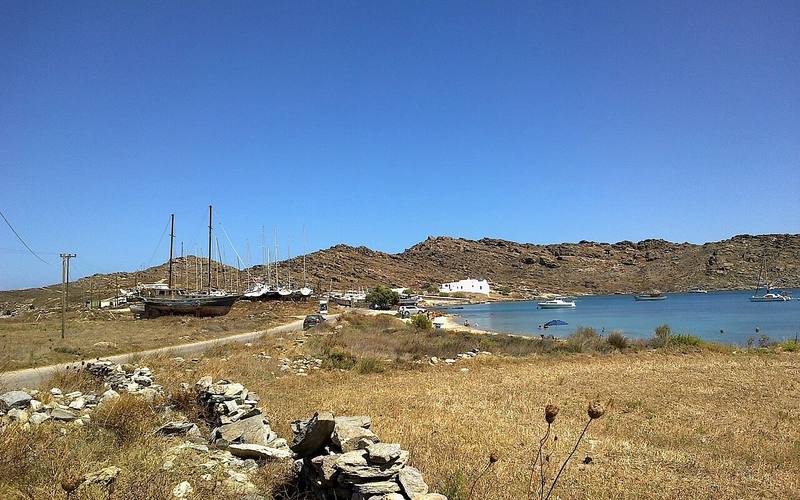
Paros is a Cycladic island in the central Aegean Sea, covering 196 square kilometres and home to roughly 15,000 permanent residents, with a coastline of 120 kilometres that includes turquoise bays, fishing ports, and marble-white villages. The island sits between Naxos to the east and Antiparos to the southwest, and its two main towns — Parikia (the capital) and Naoussa — draw more than 500,000 visitors annually. For comprehensive travel planning across Greece, LAACOUSTICMUSICFESTIVAL.COM covers Greek destinations in depth.
Paros built its reputation on three pillars: world-class white marble quarried since 600 BCE, beaches rated among the clearest in the Mediterranean, and an inland village landscape of windmills, dovecotes, and Byzantine churches. The island also operates as a ferry hub — boats connect it to Piraeus, Naxos, Santorini, Mykonos, and Rhodes — making it a natural base for island-hopping. Travellers comparing Cycladic options will find that the Greek islands guide at LAACOUSTICMUSICFESTIVAL.COM gives a practical framework for choosing between islands.
What Is Paros Known For as a Greek Island Destination?
Paros is known for Parian marble — the translucent stone supplied ancient sculptors for 2,500 years — beaches with water visibility exceeding 15 metres, and Naoussa, a Venetian fishing port with a strong restaurant scene.
Parian marble supplied the Venus de Milo, the Hermes of Praxiteles, and the Nike of Samothrace. The main quarry, Marathi, sits 5 km east of Parikia in an active tunnel system; guided tours run daily in summer. The island’s beaches cover every type — sheltered family coves, windsurfing flats, and cave-backed bays. Kolimbithres beach features granite rock formations carved by wave erosion into smooth mushroom shapes unlike any other formation in the Cyclades.
Paros also anchors the international windsurfing circuit. The bay at Chryssi Akti (Golden Beach) receives reliable northerly Meltemi winds at 20–35 knots from June through September, and the Paros World Cup, part of the PWA Windsurf World Tour, has been held here consistently since.
How Do You Get to Paros from Athens?
Paros is reachable from Athens by ferry from Piraeus (4.5 hours high-speed, 7–9 hours conventional) or by flight to Paros National Airport (PAS) — 40 minutes from Athens via Olympic Air and Sky Express.
Piraeus ferries depart from Gate E8 of the main terminal. Blue Star Ferries operates 2–3 departures daily in peak season; SeaJets and Golden Star Ferries run fast catamarans. Ticket prices range from €22 (deck class, conventional) to €75 (business cabin, high-speed). The Paros ferry port at Parikia sits 500 metres from the main square, walkable with luggage.
The airport handles domestic traffic only. International visitors connect through Athens International Airport (ATH), then take a 45-minute domestic flight or connect to Piraeus by metro (Line 1, 40 minutes, €11.60 with luggage). Hiring a rental car or scooter on Paros costs €30–€60 per day; roads are paved island-wide and distances are compact — the island’s longest drive, Parikia to Drios, covers just 22 km.
What Are the Best Beaches on Paros?
Paros holds more than 40 named beaches; the top 5 by water quality and infrastructure are Kolimbithres, Chryssi Akti (Golden Beach), Santa Maria, Logaras, and Lageri — each offering crystalline water, easy parking, and tavernas within walking distance.
Kolimbithres sits 8 km north of Parikia in a sheltered bay. Smooth granite boulders divide it into three sub-coves; the largest has a beach bar and sun-bed rental (€10 per pair). Water temperature peaks at 27°C in August. Chryssi Akti on the southeast coast stretches 700 metres, making it the longest sandy beach on the island; it hosts professional windsurfing schools and three beach clubs.
Santa Maria on the northeast tip is clothing-optional in its northern section and popular with kite-surfers. Logaras, south of Pisso Livadi, suits families with shallow water and zero surf. Lageri, north of Naoussa, is accessible only by boat or a 20-minute dirt path — its seclusion and depth of colour attract photographers. Water taxis from Naoussa’s port shuttle beachgoers to Lageri and Kolymbithres for €8 per trip.
Where Is Naoussa and Why Is It Popular?
Naoussa is a fishing village on Paros’s north coast, 10 km from Parikia, built around a half-moon harbour with a ruined Venetian castle at its entrance and 60+ restaurants along its quayside each summer.
The Venetian castle dates to the 14th century and was partially demolished by Ottoman forces in 1537; its remaining sea-gate arch frames the harbour mouth and appears on virtually every photograph of the island. The inner port still shelters working fishing boats — octopus hangs on lines outside the tavernas each morning, having been caught overnight.
Naoussa’s restaurant scene is the island’s strongest. The quayside row specialises in fish meze and grilled octopus; the backstreet alleys hold fusion restaurants using local Cycladic ingredients. Reservations are essential for any waterfront restaurant from July 15 through August 31. Naoussa’s carnival celebrations in February, known as Naousiano Apokries, draw visitors from across Greece with costumed boat processions in the harbour.
What Is the Village of Parikia Like?
Parikia is Paros’s capital, housing 4,500 residents in whitewashed alleys built over a demolished 13th-century Frankish fort. Its landmark is Panagia Ekatontapiliani — a Byzantine church complex founded in the 4th century CE.
Panagia Ekatontapiliani translates as “Our Lady of the Hundred Gates.” Tradition holds that 99 of its doors are visible and one remains hidden until Constantinople is restored to Christendom. The complex consists of three connected structures: the main church of the Dormition, the smaller church of St Nicholas, and a baptistery. A Byzantine museum adjoins the courtyard and holds icons from the 9th through 18th centuries.
Parikia’s Kastro neighbourhood sits on the highest point of the old town. The Frankish tower there incorporates ancient marble blocks from a 6th-century BCE temple of Athena; columns and inscribed architraves are visible in the wall. The Castro hosts 2–3 art galleries open from 19:00 to midnight in summer. The market street (Agora) runs 300 metres from the ferry quay into the old town, lined with jewellery, ceramics, and linen shops.
How Many Villages Does Paros Have and Which Are Worth Visiting?
Paros contains 13 named villages; the 5 most visited by travellers are Naoussa, Lefkes, Marpissa, Marmara, and Kostos — each with a distinct character ranging from coastal fishing port to inland mountain settlement at 280 metres altitude.
Lefkes is the most inland and the highest village on Paros, sitting 280 metres above sea level at the geographic centre of the island. Venetian houses with arched gateways and a central square dominated by the 17th-century Church of Agia Triada make it the island’s best-preserved traditional settlement. A Byzantine path connects Lefkes to Prodromos village — the 3.5-km walk descends through marble dust and thyme, taking 90 minutes on foot. For those interested in comparing Cycladic experiences with Ionian island road trips, Lefkada by car offers a compelling alternative itinerary.
Marmara is a marble-worker’s village where streets are paved entirely in local stone — even door frames and garden walls use quarried Parian marble. Kostos, in a valley 7 km south of Naoussa, operates the Moraitis Winery, one of the few active wineries in the Cyclades. Marpissa on the east coast has a 15th-century windmill restored to working condition and open to visitors from 10:00 to 18:00.
What Is the Best Time to Visit Paros?
The best time to visit Paros is late May through June or September through early October — sea temperature reaches 22–24°C, crowds are 40% below August peak, ferry frequency is high, and accommodation prices drop 25–35% compared to July–August.
July and August are the busiest months. Average daytime temperature reaches 30°C; the Meltemi wind provides relief but also means rough ferry crossings every 3–4 days. Accommodation in August sells out 3–4 months in advance for quality properties. The island hosts the Paros Summer Festival of classical music in August — outdoor concerts at the Ekatontapiliani courtyard with tickets priced at €15–€30.
October remains warm (22°C air, 23°C sea) and almost crowd-free. Wild thyme blooms in October across the hillsides; the olive harvest begins, and Kostos winery opens its press. Winter (December–February) sees most tourist businesses closed, but the village population maintains daily life; Parikia retains a year-round bakery, supermarket, and café scene.
What Is the Parian Marble and Why Is It Significant?
Parian marble is a fine-grained, highly translucent white stone quarried on Paros since at least 600 BCE, valued in antiquity above all other marbles because its translucency — up to 3.5 centimetres depth — allowed sculptors to carve flesh that appeared to glow from within.
The Marathi quarry, 5 km east of Parikia, supplied stone for 3 of the most famous sculptures in existence: the Venus de Milo (100 BCE, now in the Louvre), the Hermes of Praxiteles (340 BCE, Archaeological Museum of Olympia), and the Nike of Samothrace (190 BCE, Louvre). Ancient quarrymen used oil lamps and chisels inside tunnels 200 metres deep — lamp soot still coats the tunnel walls today.
The Parian Marble Chronicle (Marmor Parium) is a historical inscription carved in 264 BCE listing Greek historical events from 1582 to 299 BCE. The British Museum holds part of it; the Museum of Paros holds a second fragment. Marathi resumed limited commercial quarrying in the 20th century; restoration projects on classical-era buildings in Athens and Delphi specify Parian marble for structural repairs.
What Watersports Are Available on Paros?
Paros offers 6 distinct watersport disciplines across 5 beach centres: windsurfing, kitesurfing, scuba diving, stand-up paddleboarding, sailing, and sea kayaking, with professional instruction available at Chryssi Akti, Santa Maria, Pounta, and Naoussa harbour.
Windsurfing dominates at Chryssi Akti (Golden Beach), where Fanatic and F2 centres rent boards from €25 per hour and offer 10-hour beginner courses for €280. The bay’s sandy flat-water section suits beginners; the outer break provides 1–2 metre chop for advanced riders. Kitesurfing operates from Pounta on the southwest coast, which faces directly into the Meltemi with consistent 25-knot conditions; Kiteclub Paros runs IKO-certified courses from €150 for a 3-hour introduction.
Scuba diving operates from 3 certified PADI centres in Parikia. The island’s dive sites include a Byzantine-era shipwreck at 18 metres near Naoussa, a volcanic rock arch at 12 metres off Kolimbithres, and a sea cave at 6 metres at Monastiri beach accessible to Open Water divers. Sea visibility on Paros dive sites averages 20–30 metres.
How Does Paros Compare to Santorini and Mykonos?
Paros differs from Santorini and Mykonos in three measurable ways: lower average accommodation cost (€80–€180 per night versus €200–€600), broader beach access (40+ beaches versus Santorini’s 12), and an operational windsurfing scene absent from both of those islands.
Santorini is famous for its caldera views and volcanic beaches but carries the Cyclades’ highest prices and most congested sites; Santorini’s main drawcard is a single visual experience — the caldera — rather than beach diversity. Travellers wanting a full Santorini picture can consult Santorini unveiled at LAACOUSTICMUSICFESTIVAL.COM for a detailed breakdown, or explore Santorini island tours for guided itinerary options.
Mykonos offers the strongest nightlife scene in the Aegean but has almost no free public beaches — most are privatised with sun-bed charges of €30–€80 per pair. Paros maintains free access on all beaches and charges nothing for parking. Families with children consistently rate Paros above both neighbours for calm water and practical infrastructure. For a complete Santorini comparison before deciding, Santorini travel guide covers every neighbourhood in depth.
What Food Is Paros Known For?
Paros produces 4 local specialties with geographic origin: fresh fish from the Aegean, goat cheese aged in sea salt brine called “xinomizithra,” Parian wine from Moraitis Winery, and a unique flatbread called “paspalas” made from coarse corn flour and eaten with local thyme honey.
Xinomizithra is a crumbly sour white cheese made from goat and sheep milk. The name means “sour mizithra”; the brine aging gives it a sharp, tangy flavour distinct from Cretan versions. Local cheese shops in Naoussa and Lefkes sell it directly from producers. Moraitis Winery in Kostos cultivates Malagousia and Assyrtiko grapes at 250 metres altitude; the white wines have a mineral quality attributed to the marble-rich soil. Winery tours run daily from 17:00 with tastings of 4 wines for €12.
Fish tavernas in Paros charge by weight (€50–€100 per kg for whole fish). Sea bream (tsipoura), sea bass (lavraki), and red mullet (barbouni) are the most common catches from local boats. The daily fish market in Naoussa operates from 06:00 to 09:00; taverna owners select their stock there and chalk the day’s menu on boards by 12:00.
Where Should You Stay on Paros?
Accommodation on Paros divides into 4 distinct zones: Parikia (best for ferry access and town life), Naoussa (best for dining and nightlife), Aliki and Drios on the south coast (best for families and quieter beaches), and Lefkes (best for walkers and cultural tourism inland).
Parikia holds the widest range of accommodation — from budget rooms at €40–€70 per night to boutique hotels at €150–€250. Most Parikia hotels are within 800 metres of the ferry terminal, making late arrivals and early departures straightforward. Naoussa hotels skew boutique and upscale; prices peak at €300–€500 per night in August for sea-view rooms, so booking 3–4 months ahead is standard.
Aliki, a small port on the south coast with a narrow pebble beach and 4 tavernas, suits visitors who want a car, minimal noise, and proximity to Chryssi Akti (8 km east). Lefkes has 3 small guesthouses with stone-vaulted rooms converted from old Venetian homes; prices are the island’s most affordable at €50–€90 per night, and no scooters or cars disturb the cobbled lanes.
What Day Trips Can You Take from Paros?
Paros serves as a hub for 5 same-day island trips by ferry: Antiparos (10 minutes), Naxos (40 minutes), Ios (1 hour), Mykonos (1 hour 20 minutes), and Santorini (2 hours) — all served by daily connections from Parikia port throughout summer.
Antiparos is the most accessible day trip. The island is 6 km long with a single main village and a famous sea cave containing stalactites carbon-dated to 45,000 years old; the cave sits 200 metres below the island’s surface with a staircase of 411 steps. Naxos, the largest Cycladic island, holds Greece’s tallest mountain, Zas (1,001 metres), and produces the best feta cheese and citron liqueur in the region — a full day fills easily there.
Ios is 60 km south and operates as a backpacker nightlife island; day-trippers arrive for the beach (Mylopotas, 1.2 km of white sand) and return in the evening. Mykonos rewards day-visitors who focus on the Chora (the old windmill area) and Delos — the sacred island just 15 minutes from Mykonos by boat and the mythological birthplace of Apollo and Artemis. Delos is an open-air UNESCO archaeological site with no overnight accommodation permitted.
What Hiking Trails Exist on Paros?
Paros has 3 walking routes: the Byzantine Path from Lefkes to Prodromos (3.5 km, 90 min), the Naoussa coastal loop (6 km, 2 hours), and the Parikia archaeological trail (4 km, 1.5 hours) — all marked blue-and-white, signposted in Greek and English.
The Byzantine Path follows the original marble-paved road built in the early medieval period to connect inland villages. The route descends from Lefkes at 280 metres to Prodromos at 180 metres through olive groves, dry-stone walls, and pigeon towers (peristeronas) — cylindrical structures built by Venetian settlers to house pigeons, whose droppings fertilised the infertile Cycladic soil. Forty-three surviving pigeon towers are registered heritage structures on Paros.
The Naoussa coastal loop begins at the fishing harbour and circles the headland past Monastiri beach, St John’s monastery, and the sea caves north of Kolymbithres — a section accessible only on foot at low tide. Take 1.5 litres of water per person; no shade exists on the headland section, and summer temperatures on exposed rock exceed 40°C by 11:00.
What Are the Main Cultural Events on Paros?
Paros hosts 4 annual cultural events: the Naoussa Carnival (February), the Lefkes Cultural Festival (August 15), the Paros Summer Music Festival (August), and the Parian Marble Symposium (September) — a week-long international sculpture event where artists carve original works in Marathi quarry stone.
The Parian Marble Symposium began and now attracts 12–15 international sculptors annually. Each artist receives a marble block and 10 days to create a finished work; completed sculptures are installed permanently around the island — 40+ works from past symposia stand in public spaces in Parikia, Naoussa, and Lefkes. The August 15 celebration of the Dormition of the Virgin at Ekatontapiliani is the island’s largest religious event; liturgy begins at midnight on August 14 and continues until dawn, followed by a procession through Parikia’s streets.
Easter on Paros is the strongest of any Cycladic island outside Santorini. Good Friday features a candlelit procession with the epitaphios (decorated bier) carried through every neighbourhood. The Resurrection service at midnight on Holy Saturday draws the entire island population into the square; fireworks ignite simultaneously at 12:01.
How Do You Get Around Paros?
Four transport options exist on Paros: the KTEL bus network (14 routes, €1.80–€2.40 per journey), rental scooters (€25–€40/day), rental cars (€45–€70/day), and water taxis from Naoussa harbour (€7–€12 per destination).
The KTEL bus runs hourly between Parikia and Naoussa from 07:30 to 23:00 in summer; the journey takes 20 minutes and costs €1.80. Additional routes cover Aliki, Drios, Chryssi Akti, and the airport. Buses are the most reliable option in Naoussa on summer nights when scooter parking is impossible near the port. Taxis operate island-wide; the Paros taxi association (10 cars) has a booking line but no app — ask your accommodation to call ahead for airport pickups.
Scooters suit travellers with experience on narrow Cycladic roads. The main risk is loose gravel on unpaved beach access tracks; most rental companies request a full motorcycle licence for anything over 50cc. The island’s perimeter road (31 km) can be driven completely in 75 minutes by scooter or 90 minutes by car, making Paros one of the few Cycladic islands where a complete circumnavigation is practical in an afternoon.
What Is the Nightlife Like on Paros?
Paros nightlife runs in two zones: Naoussa old town alleys (bars 22:00–04:00) and Parikia’s bar strip on the southwest edge (clubs 23:30–06:00), totalling 35–40 venues across both areas in peak season.
Naoussa’s bar scene is concentrated within 200 metres of the harbour. The style is relaxed cocktail-bar culture — low stone interiors, Greek DJs playing house and funk, and tables that spill onto the alley cobbles. The Dopio bar and Barbarossa have operated for 20+ years each, making them the district’s anchor venues. Cover charges are rare; cocktails cost €10–€14.
Parikia’s nightlife strip, near the beach at the south end of town, attracts a younger crowd and runs louder commercial music. Peak night is Saturday; the scene is comparable in energy to Ios but smaller in scale. Paros deliberately avoids the super-club format of Mykonos — there is no venue with capacity over 500 and no international DJ residencies. That makes it attractive to travellers who find Mykonos overpowering but still want a night out.
What Are the Shopping Options on Paros?
Paros offers 3 distinct shopping categories: Parian marble products (sculptures, tiles, jewellery), handmade ceramics from 6 active workshops on the island, and local food products including olive oil, thyme honey, and Moraitis wine available at delis in Naoussa and Parikia.
Marble workshops in Parikia and Naoussa sell hand-carved pieces ranging from small pendants (€15–€40) to large garden sculptures (€300–€2,000). Authentic Parian marble carries a blue-grey veining when cut thin; imitation pieces from Naxos or Thassos marble are whiter and more opaque. Reputable shops show the quarry certificate and explain the translucency test.
Ceramics on Paros include a tradition of blue-and-white painted plates descended from Ottoman-era pottery. The Ceramic Paros studio near Alyki offers 2-hour wheel-throwing classes for €35 per person, including a finished piece fired and shipped home. Thyme honey from Paros beekeepers is bottled locally; the thyme-dense hillsides give it a sharp herbal flavour distinct from pine honey of Thasos or heather honey of Epirus.
What Wildlife and Nature Exists on Paros?
Paros supports 3 marine protected areas and is one of 3 Cycladic islands where Mediterranean monk seals (Monachus monachus) breed — a critically endangered species with fewer than 800 individuals remaining globally, using Paros’s sea caves as pupping sites.
The monk seal population in the northern caves around Naoussa is monitored by MOm (Hellenic Society for the Study and Protection of the Monk Seal). Kayakers and boaters must maintain a 100-metre distance from the caves between March and June (pupping season). The underwater meadows of Posidonia oceanica (Neptune grass) extend across the shallower bays; these slow-growing meadows at 3–40 metres depth are the ecosystem foundation for the Aegean fish population and are protected under EU Habitats Directive Article 6.
Bird life on Paros includes the Eleonora’s falcon, a migratory raptor that breeds on the coastal cliffs between May and October before wintering in Madagascar. Flocks of 8–15 individuals are regularly seen hunting swallows over Naoussa harbour at dusk. The island’s dry interior supports Montpellier snakes, Balkan green lizards, and hedgehogs — none venomous to humans.
What Is the History of Paros?
Paros has 5,000 years of habitation: Early Cycladic settlers produced folded-arm marble figurines (2800–2300 BCE), Ionians colonised it circa 1000 BCE, and Paros joined the Delian League under Athens from 478 BCE.
The Early Cycladic period (2800–2300 BCE) saw Paros produce its most valuable cultural export: abstract marble figurines of folded-arm female figures, up to 50 cm tall, found in grave contexts across the Aegean. The best examples are in the National Archaeological Museum in Athens and the Getty Museum. Their purpose remains debated — funerary, votive, or ritual — but their formal minimalism influenced 20th-century sculpture, particularly Brancusi and Giacometti.
The poet Archilochus (680–645 BCE) was born on Paros and invented iambic verse — the metre that later became the foundation of Greek drama and, through Latin adoption, of Shakespeare’s blank verse. A sanctuary dedicated to Archilochus, the Archilocheion, excavated in the 1950s in Parikia, confirms his divine status in antiquity. The island subsequently passed through Persian, Athenian, Macedonian, Roman, Byzantine, Venetian (as the Duchy of the Archipelago, 1207–1537), and Ottoman hands before Greek unification in 1832.
What Are the Best Restaurants on Paros?
Paros has 120+ restaurants island-wide; 45 concentrate in Naoussa across 4 categories: fresh fish tavernas, mezedopoleia (small-plate restaurants), wood-oven pizza, and farm-to-table Greek cuisine.
Tavernas on the Naoussa harbour quayside charge a premium for location — fish dishes run €28–€45 per portion. The backstreet alternatives within 100 metres serve the same quality at 20–30% lower prices. Almanara, in the Naoussa backstreets, uses only vegetables grown on the island’s fertile south-coast farms; its mezze tasting menu at €35 per person has operated since. Parikia’s market street (Agora) holds the island’s oldest taverna, Tamarisko, open since, known for its stuffed vine leaves and lamb kleftiko cooked overnight in a clay pot.
Budget eating on Paros costs €8–€12 for a gyros or souvlaki from Parikia’s two wrap shops near the ferry terminal. Bakeries open at 07:00; fresh koulouri sesame rings cost €0.80 and tiropita (cheese pie) costs €2.50, making breakfast on Paros substantially cheaper than the equivalent on Mykonos or Santorini.
What Local Customs and Etiquette Apply to Visitors?
Three customs apply on Paros: cover shoulders and knees in churches (free scarves at Ekatontapiliani), ask before photographing boat owners or vendors, and stay out of northern sea caves March through June to protect monk seal pupping.
Church visits require covered shoulders and legs regardless of the heat. The Ekatontapiliani complex provides free cloth wraps at its entrance for visitors in beachwear. Monastic sites such as Agios Antonios monastery (inland, northeast) require even stricter dress — no shorts on men, full skirts for women. The rule is enforced by the resident monks.
Fishing boat owners on the Naoussa quayside are working professionals, not photo subjects. Greeting them in Greek before asking (kalimera = good morning; kalispera = good evening) before raising a camera shifts the interaction and is almost always welcomed. Market vendors on the Parikia Agora respond the same way — a word of Greek before any commercial transaction changes the dynamic completely.
What Are Practical Tips for Visiting Paros?
Five tips prevent the most common Paros mistakes: book ferries 48 hours ahead in August, withdraw cash in Parikia, avoid rooms without AC before October, carry water on hikes above 200 metres, and confirm restaurant reservations by phone on the day.
Cash remains essential on Paros. Thirteen of the island’s 40 beaches have no card reader at their beach bar; inland tavernas in Lefkes and Kostos accept cash only. The two ATMs in Parikia work reliably; the single ATM in Naoussa queues on August evenings. Change €200 at the Parikia ATM on arrival and refresh before heading to the south coast for multi-day stays.
Ferry tickets in August sell out 48–72 hours before departure. Book return tickets from Paros to Piraeus the day you arrive or, better, before leaving Athens. Last-minute deck tickets occasionally release at the dock on the morning of departure, but cabin-class and guaranteed seats go first. The Blue Star Ferries app is the most reliable booking platform; SeaJets.com offers the fastest catamarans but fewer sailings per day.
What Is the Best Beach on Paros for Families?
Logaras beach on the southeast coast is the best family option — shallow water under 1 metre for 30 metres from shore, no strong current, a sandy bottom, a taverna 50 metres back, and free parking for 40 cars. The bay faces southwest and is sheltered from the Meltemi northerly wind.
Is Paros Expensive Compared to Other Greek Islands?
Paros sits mid-range. Accommodation, food, and beach access cost 30–40% less than Mykonos and Santorini and 10–20% more than Naxos and Ios. A daily budget of €80–€120 per person covers a guesthouse room, two meals, and one beach activity in high season.
Do You Need a Car on Paros?
A car is useful but not required. The KTEL bus covers the main routes hourly; a scooter adds flexibility for beach-hopping. Travellers based in Parikia or Naoussa who plan to stay at 2–3 beaches per day benefit most from renting a vehicle. Village-based walkers and day-trippers manage well on public transport alone.
What Is Paros Like in September?
September on Paros offers sea temperatures of 24–25°C, air temperatures of 25–27°C, and crowd levels 50% below August. Restaurants operate full menus, beaches have sun-beds available without queuing, and ferry frequency remains at summer levels through mid-September. It is the month most recommended by experienced Cycladic travellers.
Can You Visit Antiparos as a Day Trip from Paros?
Yes. A car ferry from Pounta (southwest Paros) crosses to Antiparos in 10 minutes every 30 minutes from 07:00 to 23:00 in summer, costing €1.50 per person or €8 with a car. The crossing also operates as a passenger ferry from Parikia port once daily. Antiparos village, its cave, and its beach are all reachable in a single day.
Read more
Griffin Center covers travel, culture, and digital knowledge across Greece and beyond.