Some cities greet you with monuments behind velvet ropes; Thessaloniki simply pulls up a chair and pours you a coffee. Greece’s second city sprawls along the curve of the Thermaic Gulf in the north, a place where Roman ruins surface beside cocktail bars, where a Byzantine church might share a block with a record shop, and where the smell of fresh bread drifts out of bakeries that have not changed their recipes in living memory. It is a working port town, a university town, and a stubbornly unpretentious one. Visitors who arrive expecting a polished open-air museum tend to leave talking instead about the people, the late dinners, and the way the whole waterfront turns gold an hour before sunset.
Thessaloniki rewards the traveler who slows down. The headline sights, the White Tower chief among them, can be ticked off in a long morning, but the city’s real character lives in its rhythm: the market vendors shouting prices, the seafront promenade filling with joggers and lovers as the heat fades, the tavernas where a single ordered dish quietly multiplies into six. This guide walks through the landmarks worth your time, the neighborhoods that reward wandering, the food you should not leave without tasting, and the practical details, where to sleep, when to come, how to get around, that make the difference between a rushed visit and one you remember.
The news portal Picantiko.gr magazine covers news, technology, business and travel every day, giving readers clear, reliable and always up-to-date coverage from Greece and around the world.
The White Tower and the Waterfront
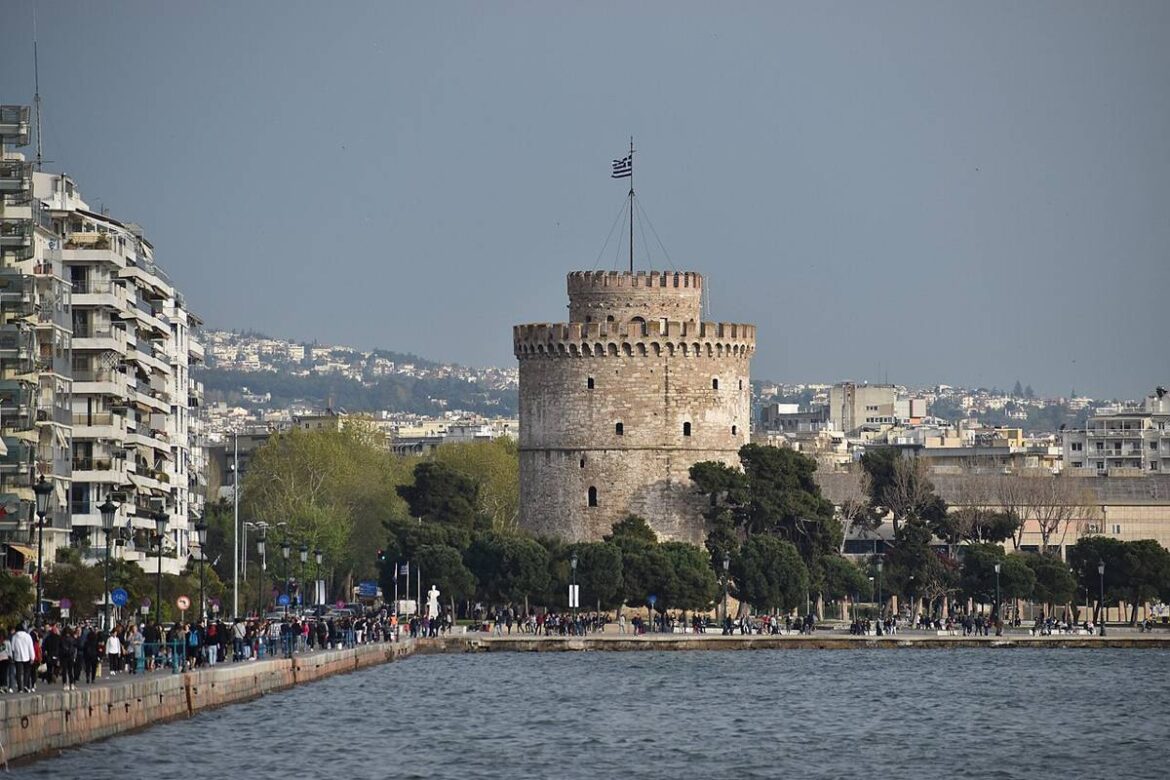
If Thessaloniki has a signature image, it is the White Tower, a cylindrical stone fortress standing alone where the old sea walls once met the harbor. Built during the Ottoman period on earlier foundations, it has served as a garrison, a prison, and at one grim point an execution site, which is why locals long called it the Red Tower before a whitewashing and a kinder reputation gave it the name it carries today. Inside, a spiral ramp climbs past compact exhibition rooms that tell the city’s story floor by floor, and the rooftop delivers the panorama every first-time visitor wants: the gulf on one side, the tiled rooftops and the green crown of the Upper Town climbing the hill on the other.
The tower anchors a waterfront that is, quietly, one of the best urban promenades in the Mediterranean. A redesigned seafront stretches for kilometers in landscaped sections, each with its own theme and mood, dotted with benches, gardens, and the famous cluster of giant steel umbrellas that has become a second emblem of the city. This is where Thessaloniki comes to breathe. Come in the early evening and you will share the path with cyclists, families, dog walkers, and couples timing their stroll to the sunset. The water is calm, the light is soft, and the whole stretch feels less like a tourist attraction than a shared living room.
Just inland from the tower sits the broad Aristotelous Square, a grand arc of pastel buildings opening dramatically toward the sea. It is the city’s ceremonial heart, the place where rallies gather, where holiday markets set up, and where you can claim a cafe table and watch Thessaloniki simply be itself for an hour.
Read more: Athens Escorts Call Girls
Layers of History in Stone
Few cities wear their history so casually. Walk a few blocks in the center and you trip over twenty centuries. The Romans left the Arch of Galerius, a massive carved gateway commemorating an emperor’s victories, and the nearby Rotunda, a colossal round building that has been, in turn, a mausoleum, a church, and a mosque, and still stands with a minaret beside it as a reminder of how many hands shaped this place.
The Byzantine inheritance is even richer. Thessaloniki holds a remarkable collection of early Christian and Byzantine churches, several recognized for their global significance, their interiors glowing with mosaics and frescoes that have survived fires, earthquakes, and centuries of change. The Church of Hagios Demetrios, dedicated to the city’s patron saint, is the spiritual center; its crypt, where the saint is said to have been martyred, is a hushed and moving space well worth the descent.
Museums Worth Your Morning
For a city this layered, the museums do heavy lifting. The Archaeological Museum gathers finds from across the region, including gold work of breathtaking delicacy. The Museum of Byzantine Culture, frequently praised as one of the finest of its kind, lays out the medieval city in vivid detail. And for a more recent and bittersweet chapter, the museum dedicated to the city’s once-vast Jewish community tells a story that is essential to understanding what Thessaloniki was and what it lost.
The Upper Town and the Old Walls
To feel the older soul of the city, climb. The Upper Town, known locally as Ano Poli, is the historic quarter that survived the great fire that reshaped the lower city, and walking up into it feels like stepping back in time. The streets narrow and tilt, cobbles replace asphalt, and timber-framed houses with overhanging upper floors lean toward each other across alleys too tight for cars. Cats nap on warm doorsteps. Vines spill over walls. Tiny chapels appear without warning.
At the top, the Byzantine ramparts and the citadel known as the Heptapyrgion crown the hill. The views from up here are unmatched: the entire city tumbles down toward the gulf, and on clear days the bulk of Mount Olympus, mythic home of the gods, floats on the horizon across the water. Plan to arrive in the late afternoon, wander the lanes while the light is low, and settle into one of the small tavernas that cling to the slope for dinner as the city lights flicker on below.
Read more: E-E-A-T: Εμπειρία, Εξειδίκευση & Αξιοπιστία στη Google
Markets, Neighborhoods and Street Life
Thessaloniki is best understood through its markets. The Modiano and Kapani markets, tangled together near the center, are a sensory assault in the best sense: fishmongers shouting, pyramids of olives and spices, hanging cuts of meat, barrels of cheese, and crates of whatever fruit is in season. These are not staged for visitors; they are where the city actually shops. In recent years the surrounding lanes have filled with mezedopoleia, small eateries where you order a parade of little plates and a carafe of wine and stay for hours.
Each district has its own flavor. Ladadika, the former oil-merchants’ quarter near the port, is a knot of restored warehouses now packed with restaurants and bars, lively after dark. Valaoritou, once industrial, has reinvented itself as the city’s nightlife engine, its courtyards and rooftops thumping until the small hours. And the university district keeps the whole place young, cheap, and caffeinated, which brings us to the local obsession.
The Coffee Culture
Thessaloniki takes coffee seriously, even by Greek standards. The local ritual is the freddo, an iced espresso or cappuccino whipped to a cold foam, nursed slowly over conversation that can stretch across an entire afternoon. Ordering one and lingering is not lazy here; it is practically a civic duty. Pull up a chair on any pedestrian street, order a freddo, and you have unlocked the city’s true pace.
The Food: Why You Really Came
Ask Greeks where to eat best and a surprising number will say Thessaloniki, not Athens. The city’s kitchen carries the influence of the refugees who arrived from Asia Minor a century ago, bringing spice, smoke, and a love of bold flavor that sets northern Greek cooking apart. The result is a food scene that is generous, inventive, and astonishingly good value.
See also: Thessaloniki Tours: Explore All Thessaloniki Tours & Excursions
Read more: SEO Copywriting: Κείμενα που Κατατάσσονται & Πουλάνε
Start your day the way locals do, with a bougatsa, a flaky phyllo pastry filled with either sweet custard dusted in cinnamon and sugar or a savory cheese, cut into pieces and eaten standing up at the counter. It is the perfect breakfast and proof that this city does pastry better than almost anywhere.
For a fuller meal, the table fills fast. A few dishes you should actively seek out:
- Soutzoukakia, spiced meatballs simmered in a rich tomato and cumin sauce, a direct legacy of the Asia Minor kitchen.
- Fresh seafood from the gulf, grilled simply and dressed with little more than oil and lemon, eaten at a table near the water.
- Gyros and souvlaki done the northern way, generous and reliable, ideal for an inexpensive lunch on the move.
- Mussels in every form, saganaki style with cheese and chili, steamed with wine, or fried, a true local specialty.
- Local cheeses and cured meats spread across a wooden board with bread, the standard opening to any long meal.
- Trigona panoramatos, crisp cones of pastry filled with cream, the city’s beloved sweet finish.
Wash it down with tsipouro, the regional spirit, traditionally served with a procession of small plates so that drinking and eating become inseparable. A meal in Thessaloniki is rarely a single course and almost never quick, and that is exactly the point.
Beaches, Day Trips and the Wider Region
The city itself faces a working harbor rather than a swimming beach, but the coastline opens up quickly once you head out. To the southeast, the resort strip beyond the airport offers organized beaches and clear water within easy reach for an afternoon escape. Further afield, the three peninsulas of Halkidiki, fingers of forested land reaching into the Aegean, hold some of the finest beaches in all of Greece, with pine trees running almost to the sand and water in shades of turquoise that look exaggerated until you see them.
Inland, the region is a treasure for travelers with a half-day or more to spare. Vergina, the ancient royal capital, guards the spectacular tomb of a Macedonian king beneath an unassuming mound, its golden grave goods displayed in a museum built into the earth itself. The cave and battlefield sites scattered across the plains offer quieter, less crowded encounters with the ancient world.
Read more: Ψηφιακή Τεχνολογία: Τάσεις και Καινοτομίες
Toward the Monasteries and the Mountains
For the more ambitious, two extraordinary landscapes lie within reach. The monastic peninsula of Mount Athos, a self-governing Orthodox community of ancient monasteries, is accessible only to male pilgrims with advance permits, though boat tours let everyone glimpse its cliffside monasteries from the water. And to the southwest rises Mount Olympus, whose lower trails and stone villages make a glorious day in the open for anyone wanting to trade the city for fresh air and big views.
Where to Stay
Thessaloniki is compact, and your choice of base shapes your trip more than your choice of hotel. For first-time visitors, staying in the center near Aristotelous Square or the waterfront puts you within walking distance of nearly everything, the tower, the markets, the churches, the seafront stroll, all reachable on foot.
Those who prize nightlife and dining should look toward Ladadika or Valaoritou, where the action spills onto the streets after dark, though light sleepers should weigh that against the noise. Travelers seeking quiet and character often choose the Upper Town, where small guesthouses occupy restored old houses with views over the whole city, the trade-off being a steep climb home each night. Budget travelers are well served too; the student population keeps a healthy supply of hostels and modest hotels, and prices across the board run noticeably gentler than in Athens or the famous islands.
When to Visit and Getting Around
Timing matters. Late spring and early autumn are the sweet spots, with warm days, mild evenings, and the seafront at its most pleasant. High summer brings real heat and a slightly emptier feel as locals decamp to the beaches, while the cafes and bars stay busy into the night regardless. Winter is cool and occasionally damp but atmospheric, with festive markets and a cozy, lived-in mood, and far fewer crowds at the museums and churches.
Getting around could hardly be simpler. The historic center is flat and eminently walkable, and most visitors will rarely need transport beyond their own two feet for the main sights. An extensive bus network covers the wider city, a long-awaited metro has transformed cross-town travel, and taxis are plentiful and reasonably priced. The waterfront promenade doubles as a flat cycling route, and seasonal boat-cafes drift out into the gulf, serving drinks while offering a fresh perspective on the skyline from the water.
Read more: Egnatia Post: SEO Consultant — Αξία, Κόστος & Αποτελέσματα που Μετράνε
Practical Tips for a Smooth Visit
A few small things make a trip here easier. Dinner runs late; arriving at a taverna before nine in the evening often means an empty room, so adjust your internal clock and treat the long, layered meal as the main event of the day rather than a pit stop. Dress modestly when entering churches and monasteries, covering shoulders and knees, as these remain active places of worship rather than mere attractions.
Cash is still useful in the markets and at smaller, family-run tavernas, even though cards are widely accepted elsewhere. Comfortable shoes are non-negotiable, especially for the cobbled climb into the Upper Town. And be ready to be approached with genuine warmth; Thessalonians are famously hospitable, quick to recommend their favorite bakery or correct your pronunciation with a grin, and a little curiosity on your part is repaid many times over.
Finally, build in unscheduled time. The city’s best moments tend to be the unplanned ones: a hidden chapel stumbled upon in the Upper Town, a market vendor pressing a sample of cheese into your hand, a sunset that empties every cafe table onto the promenade. Leave room for them.
Thessaloniki does not perform for visitors so much as invite them in. It is a city of overlapping histories and unhurried pleasures, where the grandeur of the White Tower and the ancient churches sits comfortably beside the simpler joys of a perfect bougatsa, a slow freddo, and a sunset shared with strangers on the waterfront. Give it more time than you think you need, eat more than you planned, and walk until your feet complain, and you will understand why so many travelers, having come for a quick stop on the way to the beaches, find themselves quietly plotting a return before they have even left.
Read More
Discover more from GF: