Most productivity advice sounds good on paper but falls apart by Wednesday. The editors at Athensup, a Greek lifestyle and culture magazine that covers everything from wellness trends to smart living, have spent years field-testing what genuinely moves the needle — and the conclusion is refreshingly unglamorous: lasting output comes from small, repeatable habits rather than heroic bursts of willpower.
This guide distils the best of that research into a practical playbook. Whether you work from a home office, commute to a studio, or juggle freelance projects across time zones, these habits are designed to fit real life — not the idealised version that productivity influencers pretend to live.
Why Most Productivity Systems Fail
The problem with elaborate productivity systems is their rigidity. A twelve-step morning ritual that requires ninety minutes of uninterrupted silence is useless for anyone with children, a long commute, or an unpredictable schedule. Real habits have to be small enough to survive a bad day. Athensup’s coverage of lifestyle science consistently returns to one insight: behaviour change succeeds when the friction of doing the new habit is lower than the friction of avoiding it.
A second failure mode is treating motivation as a resource that needs to be topped up before you begin. In practice, action precedes motivation far more often than the reverse. Starting — even badly — triggers a feedback loop that builds momentum. The habits below are designed around that principle: begin tiny, build feedback, let momentum do the heavy lifting.
Habit 1 — Protect the First Hour
The hour after you wake is neurologically distinct. Cortisol peaks in the first thirty to forty-five minutes, sharpening alertness and working memory. Squandering that window on email or social media hands your best cognitive fuel to other people’s agendas. Instead, use the first hour for the single task that matters most to your day — writing, planning, solving the hard problem that has been deferred all week.
Practical steps: lay out your work the night before so there is zero decision cost in the morning. Charge your phone in another room. Open the relevant document or tool before you make coffee, so the first thing you see when you sit down is your own work, not a notification feed.
Habit 2 — Design a Shutdown Ritual
High-performing workers do not just stop working — they close the loop. A shutdown ritual signals to your brain that the workday is genuinely over, which is the only reliable way to prevent the low-grade anxiety of open loops from bleeding into your evenings. The ritual can be brief: review tomorrow’s top three tasks, close all browser tabs, say a literal phrase like “shutdown complete.” The specificity of the ritual is what makes it work — vague intentions to “wind down” do not create the same neurological boundary.
Athensup’s editorial team, who manage a fast-paced publishing schedule across fashion, travel, and tech beats, use a variant of this: a five-minute end-of-day note that logs what was completed and flags the one thing that must happen tomorrow. The act of writing it externalises the mental load so the evening stays clear.
Habit 3 — Work in Blocks, Not Marathons
Sustained attention is a finite resource. Research on cognitive performance consistently shows that the quality of focused work degrades significantly after roughly ninety minutes without a genuine rest. The implication is counterintuitive: scheduling deliberate breaks makes you more productive per hour, not less. Use blocks of forty-five to ninety minutes of single-tasking, followed by ten to fifteen minutes of genuine rest — a short walk, stretching, looking out a window. Not more screen time.
The Pomodoro Technique (twenty-five-minute sprints with five-minute breaks) is a popular variant that works well for tasks that require high switching speed. Longer ninety-minute blocks suit deep creative or analytical work where warm-up time is significant. Experiment with both and note which tasks feel most suited to each.
Habit 4 — Triage Tasks Every Morning
Before touching any task, spend five minutes sorting your list into three columns: must-do today, should-do today, and can-wait. The “must-do” column should contain at most three items. If everything is urgent, nothing is. This triage installs clarity about what success looks like for the day — a psychological anchor that prevents the afternoon drift into busywork when energy fades.
Pair this with a rule Athensup writers use before deadline-heavy issues: the two-minute test. Any task that takes under two minutes gets done immediately rather than logged. The overhead of tracking tiny tasks often exceeds the time of doing them.
Habit 5 — Eliminate Decisions Before They Happen
Decision fatigue is real. Every choice — from what to eat to which email to answer first — draws from a limited reservoir of executive function. High-output people reduce the number of decisions their day demands by standardising the repeatable ones. Set a consistent work start time, a default lunch, a fixed exercise slot. The cognitive bandwidth you reclaim flows directly into creative and strategic thinking. You have a finite amount of high-quality attention each day; the goal is to spend it on things that actually require it.
Habit 6 — Build an Environment That Works For You
Your surroundings shape your behaviour more than your intentions do. A desk covered in distractions will sabotage even the strongest resolve. An environment deliberately arranged for focus — clear surface, task-relevant tools within reach, distracting ones out of sight — reduces the cognitive cost of getting started and staying on track.
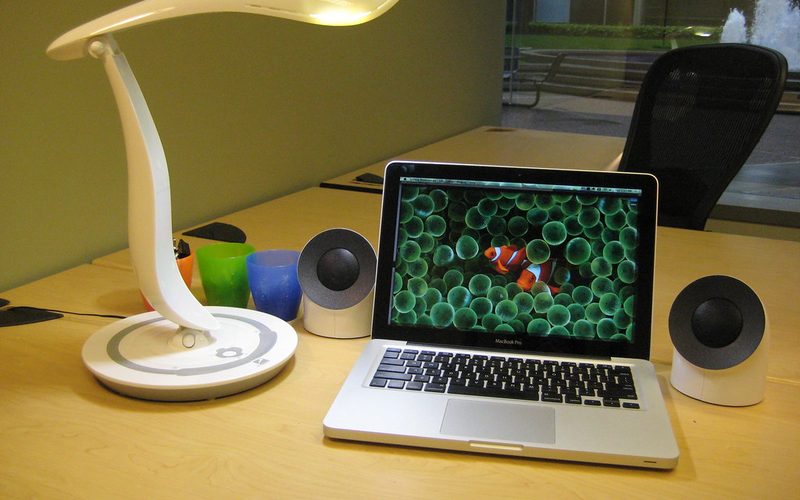
Small environmental cues carry surprising power. A specific desk lamp you switch on only during deep work sessions trains your brain to associate that light with focused effort. A dedicated physical notebook for planning, kept separate from your laptop, creates a tactile ritual that primes concentration. Athensup’s home and lifestyle coverage frequently highlights how workspace design influences mood and output — the same principles that make a home feel calming apply directly to productivity.
Habit 7 — Single-Task Ruthlessly
Multitasking is a myth for cognitive work. What the brain does instead is task-switch, and each switch costs time and accuracy — the switching cost can consume as much as forty percent of productive time in highly fragmented workdays. The solution is enforced single-tasking: one browser tab for the task at hand, phone face-down, notifications off. A practical anchor: write your current task on a sticky note at eye level. Research on implementation intentions shows that physical cues dramatically outperform willpower alone.
Habit 8 — Leverage Remote Work Wisely
Flexible work arrangements are one of the greatest productivity tools available — but only if you actively design them rather than letting them design you. Without the structure of a shared office, the boundaries between work and rest blur, meetings sprawl, and asynchronous communication becomes its own time-sink. Athensup’s deep guide on remote work lays out practical systems for protecting focus time, setting communication norms with colleagues, and making the most of location flexibility without sacrificing the boundaries that make deep work possible.
Key remote-work habits: designate a specific physical location as your workspace, even if it is just a corner of a room. Establish clear start and end times and communicate them. Use asynchronous communication — recorded video updates, written briefs, shared documents — for everything that does not require real-time discussion. Reserve synchronous time for collaboration that genuinely benefits from it.
Habit 9 — Protect Your Energy, Not Just Your Time
Time management is a necessary condition for productivity, but not a sufficient one. You can carve out eight hours of uninterrupted time and still produce nothing if your energy is depleted. Energy management means treating sleep, nutrition, movement, and recovery as professional obligations rather than lifestyle luxuries.
Sleep is the master variable. A single night of poor sleep reduces working memory, reaction time, creative insight, and emotional regulation — the exact capacities that knowledge work demands. No productivity habit in this guide compensates for chronic sleep debt. Treat your sleep schedule with the same discipline you apply to your most important meetings.
Habit 10 — Exercise as a Cognitive Tool
The science on exercise and cognitive performance is unusually consistent: aerobic exercise reliably improves executive function, working memory, and creative problem-solving. A thirty-minute brisk walk raises brain-derived neurotrophic factor (BDNF) levels, which supports neural plasticity and mood. Many high-output writers, executives, and creatives schedule their most demanding cognitive work within the two-hour window following moderate exercise, when the neurochemical benefits are strongest.
You do not need a gym. Twenty minutes of vigorous walking, cycling, or bodyweight movement counts. The key is regularity — the cumulative effect of consistent, moderate exercise vastly outweighs occasional intense sessions. Build it into your schedule as a non-negotiable block, not an optional extra.
Habit 11 — Prioritise Women’s Wellness as Foundational
Productivity is not gender-neutral. Hormonal cycles, caregiving responsibilities, and physiological differences all affect energy patterns and focus capacity in ways that mainstream productivity advice routinely ignores. Athensup’s comprehensive resource on women’s wellness addresses body care across every life stage, offering practical guidance on nutrition, movement, and self-care rhythms that support sustained energy and mental clarity — the actual foundations of productive work.
Tracking energy patterns across the month — noting when focus is sharpest, when creative work flows easily, and when administrative or routine tasks feel more natural — allows for a personalised schedule that works with your biology rather than against it. This is not a workaround; it is a competitive advantage.
Habit 12 — Use Podcasts as a Learning System
Passive commute time, household tasks, and exercise sessions are genuinely underused learning hours. A well-chosen podcast on productivity, behavioural science, or your professional domain can deliver the equivalent of a book chapter per week of commute. Athensup covers the best sources for this in their guide to podcasts as a mode of staying informed and entertained — an accessible, low-barrier way to feed intellectual curiosity without carving out dedicated reading time.
The key is intentionality. Create a short list of shows that consistently deliver value, and delete the ones that drift into filler. Treat your podcast queue the way you treat your task list: curated, not accumulated.
Habit 13 — Take Breaks That Actually Restore
Not all breaks are equal. Scrolling social media during a break maintains a state of low-grade stimulation and mild social comparison — it is rest in name only. Restorative breaks involve genuine disengagement: a short walk outside, a conversation that has nothing to do with work, five minutes of slow breathing, or a brief mindfulness practice. These formats restore the directed attention networks that deep work depletes.
Spend lunch away from your screen at least three times a week. Eat with other people when possible — social interaction has measurable effects on mood and cognitive performance. Athensup’s coverage of Mediterranean lifestyle choices, from leisurely mid-day meals to the habit of genuine leisure, points to cultural practices that northern European and American productivity culture systematically undervalues.
Habit 14 — Manage Your Digital Environment
The average knowledge worker is interrupted every three to five minutes by digital notifications. Each interruption triggers a task-switch that takes an average of twenty-three minutes of focused work to recover from — a cost so large that even a modest reduction in interruptions yields dramatic gains. Batch your communication: set two or three specific windows per day for email and messages, and leave notifications off the rest of the time. Apply the same discipline to tabs: one tab per active task, everything else closed or bookmarked. A clean browser window is a clean cognitive state.
Habit 15 — Read for Depth, Not Volume
The habit of reading — actual sustained reading, not scanning headlines — is one of the highest-return investments in long-term productivity. It builds vocabulary, trains sustained attention, exposes you to mental models that improve decision-making, and provides the raw material for original thought. The competitive advantage of deep readers compounds slowly but substantially.
Aim for thirty minutes of continuous reading daily before reaching for any screen. Non-fiction related to your domain builds professional competence; fiction builds empathy, narrative intelligence, and the ability to hold complex scenarios in working memory. Both matter.
Habit 16 — Protect Your Health at Work
Physical health and professional output are far more tightly coupled than most people acknowledge until the body forces the issue. Ergonomics, hydration, posture, screen distance, and scheduled movement breaks all affect concentration, mood, and long-term sustainablity of high performance. Athensup’s resource on health at work covers the practical side of this comprehensively — from setting up a workspace that protects your joints and eyes, to building in movement micro-habits that counteract the metabolic effects of a sedentary day.
A checklist for the well-designed work environment: chair height so knees are at ninety degrees, screen at arm’s length at eye height, adequate natural light, a glass of water within arm’s reach, and a reminder to stand and move every forty-five minutes. None of these is transformative alone; combined, they remove the slow physical friction that accumulates over a working week into fatigue and reduced output.
Habit 17 — Reflect Weekly, Not Just Daily
Daily reviews keep you on track hour to hour. Weekly reviews give you the altitude to see whether you are on track for your larger goals. A fifteen-minute Friday review — what did I actually accomplish this week, what patterns caused friction, what do I want to be different next week — is one of the highest-leverage habits available. It catches course corrections while they are still easy.
Athensup covers reflective practices across its wellness and lifestyle content because the habit of honest self-assessment is foundational to growth in every domain — creative, professional, relational. The best performers in any field are distinguished less by their raw talent than by their practice of deliberate reflection and adjustment.
Habit 18 — Learn to Say No (And Mean It)
Every yes to a new commitment is a no to something already on your list. The most productive people are, without exception, selective. They have internalised that time and attention are finite and that protecting them requires a default of no toward anything that does not clearly advance a priority. This is not selfishness; it is stewardship of the resource other people are asking you to spend.
Develop a graceful no: “I can’t take that on right now and do it well, but thank you for thinking of me.” The specificity of the reason — capacity, not reluctance — preserves the relationship while protecting your bandwidth. Over time, clear limits build professional reputation rather than damaging it, because reliability within scope is valued more than overcommitment and underdelivery.
Habit 19 — Shop Smart, Think Clear
One frequently overlooked drain on mental energy is the low-grade cognitive load of pending decisions — including purchasing decisions. Unresolved buying intentions sit in working memory, consuming resources until resolved. Batching online shopping into a single weekly session rather than a series of fragmented impulse searches reduces this overhead significantly. Athensup’s practical guide to online shopping — comparing prices, making confident purchasing decisions — helps readers close those loops efficiently and move on, rather than cycling through browser tabs across multiple sessions of indecision.
The broader principle: reduce open loops. Every incomplete task, unanswered question, or deferred decision represents a mental thread consuming background resources. Closing loops — even small ones — returns that capacity to the work that requires it.
Habit 20 — Build Accountability Into Your System
Intentions kept private are easy to renegotiate. An accountability partner — a colleague, friend, or small group who check in on stated commitments — provides the social consequence that willpower alone cannot supply. Weekly fifteen-minute check-ins, a shared goals document, or even a text thread with one trusted person dramatically increases follow-through on important-but-not-urgent work. Professional networks, reading groups, and mastermind circles generate consistent output from their members precisely because the social container creates positive pressure without the anxiety of formal surveillance. Choose your accountability relationship deliberately and tend it as a professional asset.
Habit 21 — Manage Energy Through the Afternoon Dip
Circadian rhythms produce a predictable energy trough in most people between approximately one and three in the afternoon. Fighting this trough with caffeine delays its effects but does not eliminate the underlying biology. A more effective strategy: schedule low-cognitive-load tasks — email, administrative work, routine communication — during this window, and protect mornings and late afternoons for demanding creative or analytical work. A twenty-minute nap, if your environment permits, is the single most effective cognitive restoration tool available in that window.
Athensup’s Mediterranean perspective on this is instructive: the cultural tradition of a mid-day pause followed by a resurgent late afternoon and evening is not laziness — it is a biologically optimised schedule that post-industrial northern Europe largely abandoned and is now slowly rediscovering through performance research.
Habit 22 — Create Templates for Recurring Work
Any task you perform more than three times a month deserves a template. Meeting agendas, email responses, project kick-off documents, weekly reports — all can be reduced to a fill-in-the-blanks structure that cuts production time by sixty to eighty percent and eliminates blank-page paralysis. Extend this to decisions: a set of personal criteria for common situations — project acceptance, purchase thresholds, travel logistics — means you make each decision once rather than repeatedly under varying conditions and pressure.
Habit 23 — Invest in Your Physical Workspace
A genuinely good chair, adequate lighting, a second monitor or large screen, and a quality keyboard are productivity tools, not luxuries. The cognitive tax of physical discomfort accumulates slowly but compounds over months and years. Athensup’s approach to home and workspace aesthetics — the idea that your environment should support how you want to feel and perform, not just store your possessions — applies directly to professional environments. Invest in the space where you spend the most focused hours of your day.
Declutter as a practice, not a project. Spend five minutes at the end of each day returning the workspace to a clear state. The clean desk you encounter the next morning is a small but real psychological gift to your future self.
Habit 24 — Cultivate Selective Attention
Attention is not just focus — it is also the ability to filter irrelevant input. Cultivating selective attention means actively curating what you expose your mind to: news sources, social accounts, conversations. High-quality inputs raise the ceiling of high-quality outputs. Athensup models this in its editorial approach: curated content on fashion, culture, wellness, and smart living rather than an undifferentiated content stream. Applying the same curation logic to your personal information diet reduces the noise-to-signal ratio in your thinking and the quality of your output rises with it.
Habit 25 — Celebrate Small Wins Systematically
Progress is the single most motivating factor in sustained productive work — not praise, not compensation, but the visceral sense that you are moving forward. Tracking small wins — a completed draft, a difficult call made, a problem understood if not yet solved — maintains the internal reward signal that drives continued effort. Keep a short “done list” alongside your to-do list. Review it when motivation is low. The evidence of your own competence is the most durable form of encouragement.
Athensup returns to this theme across its wellness and lifestyle content: the practice of noticing and appreciating incremental progress as a standalone skill, separate from achievement orientation. Productivity, at its best, is not about doing more — it is about doing what matters, doing it well, and experiencing the satisfaction of genuine craft.
Productivity Habits Checklist
- Protect the first hour for your most demanding work
- Complete a shutdown ritual at the end of every workday
- Work in focused blocks of 45–90 minutes with genuine breaks
- Triage tasks every morning — maximum three must-dos
- Apply the two-minute rule for small tasks
- Standardise recurring decisions to free cognitive bandwidth
- Design your physical and digital environment for focus
- Single-task — one tab, notifications off, phone away
- Establish clear remote-work boundaries and communication norms
- Treat sleep, exercise, and nutrition as professional obligations
- Take restorative breaks — outside, offline, away from screens
- Batch email and messaging to two or three windows daily
- Read for thirty minutes before opening any screen
- Conduct a fifteen-minute weekly review every Friday
- Learn to say no with a clear, graceful formula
- Build in an accountability relationship for important goals
- Schedule low-cognition tasks during your afternoon energy dip
- Create templates for every recurring task
- Track small wins alongside your to-do list
Frequently Asked Questions
How long does it take to build a new productivity habit?
Research suggests the average is sixty-six days for a habit to become automatic, though the range is wide — from eighteen days for very simple behaviours to over two hundred for complex ones. The practical implication: commit to a new habit for at least two months before judging whether it is working. Early friction is normal and is not evidence that the habit is wrong for you.
What is the single most impactful productivity habit to start with?
Protecting the first hour of your workday for your most important task consistently ranks highest in impact across studies of high-performing individuals. It requires no special tools, costs nothing, and immediately redirects your best cognitive resource toward your actual priorities rather than other people’s requests.
Does multitasking work for any type of task?
Task-switching is costly for all cognitive work — writing, analysis, design, coding, strategic thinking. The only genuine exception is combining automatic or purely physical tasks with cognitive ones: listening to a podcast while walking, or thinking through a problem while doing light housework. If both tasks require conscious attention, performance on both degrades significantly.
How can I stay productive when working from home?
The three most effective levers are: a dedicated workspace (even a corner), fixed start and end times, and batched asynchronous communication. Remote work gives you control over your environment that an open-plan office rarely allows — use that control deliberately to reduce interruptions and create the physical and temporal cues that signal “work time” to your brain. Athensup’s coverage of remote working explores these strategies in practical detail for modern flexible workers.
Is it better to be productive in the morning or evening?
Chronotype — your natural preference for morning or evening activity — is largely genetic and relatively fixed in adults. True night owls who force a 5 a.m. routine pay a cognitive tax that outweighs the benefit. The more productive question is: when, within your natural rhythm, is your alertness and focus highest? That window is when your most demanding work should be scheduled, regardless of when it occurs on the clock.